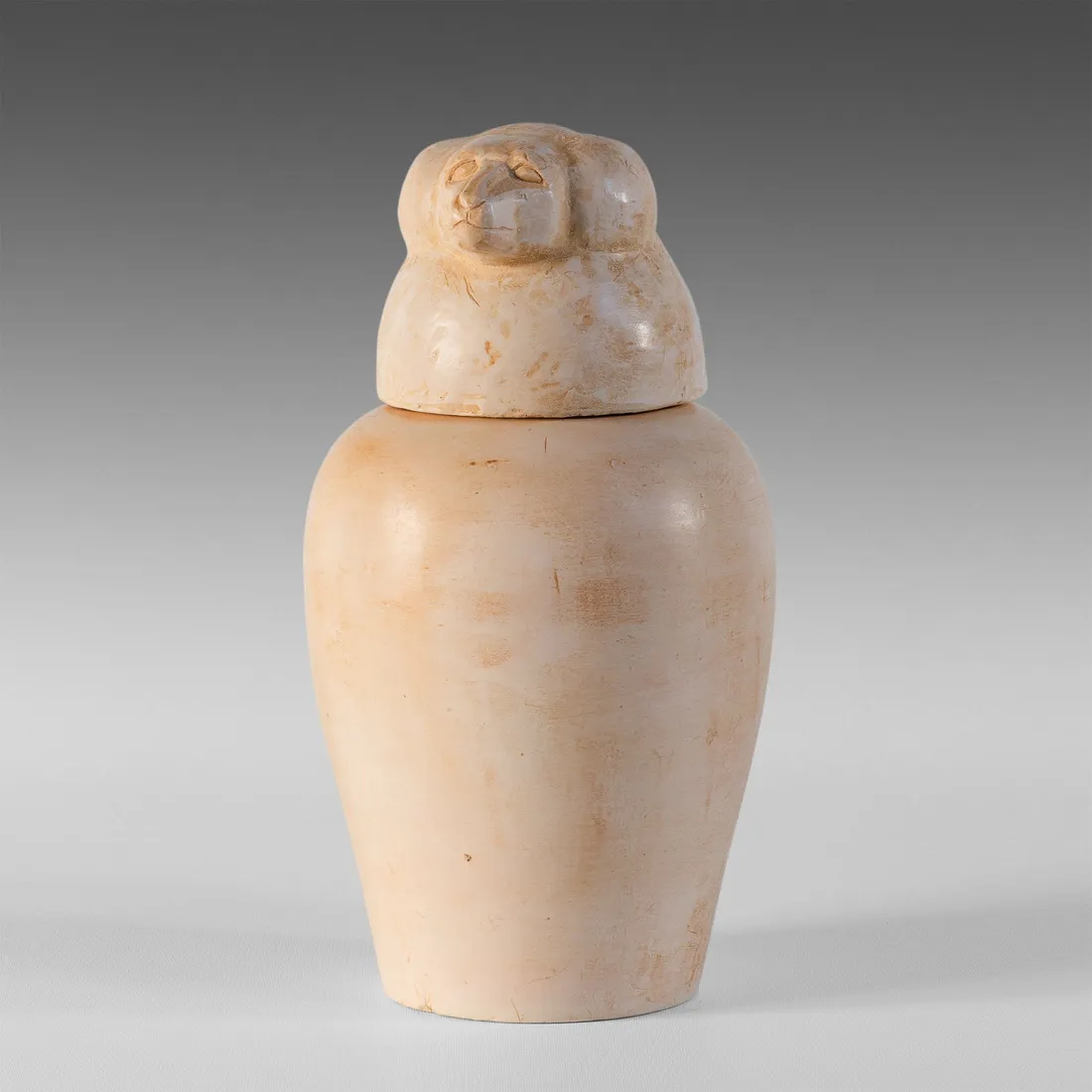
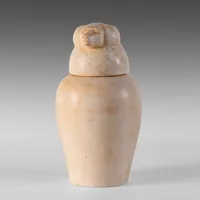
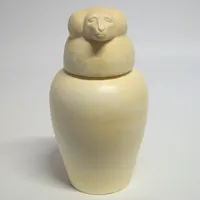
Hapi Canopic Jar with Baboon Head
- Fabriqué en France, à la main
- Paiement sécurisé
- Retour sous 14 jours
Terracotta reproduction: Hapi Canopic Jar with Baboon Head
Egyptian Art, Late Period
Handcrafted in Brittany, France
Hand-decorated
Dimensions: H 23 x W 12 x D 12 cm
Date and origin
Late Period
Egypt
Where the original is held
Pelizaeus Museum, Hildesheim, Germany
The story behind Hapi Canopic Jar with Baboon Head
In the funerary furniture of the pharaohs, there are wooden or stone chests housing a series of 4 vases, most often made of stone as the alabaster artistically carved. These vases called Canopes after the city of Kanopos located east of Alexandria, where the first specimens were found, contained the viscera of the deceased.
These were entrusted and protected by the four sons of Horus, whose heads most often decorated the lids: Amset, with human head (hence the name of dill, plant known for its preservation properties) watches over the stomach, Hapi with baboon head for the intestines, Douamoutef looks like a dog and protects the lungs, Qebekhsenouf with falcon head, the liver.